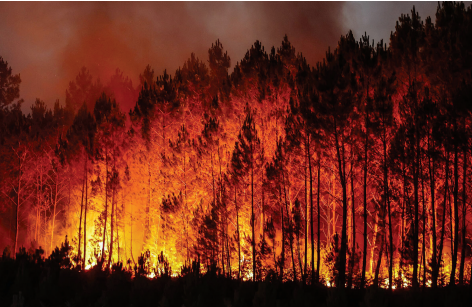
According to the Government of Canada, wildfire seasons are now longer, more complex and more challenging than in the past, and 2026 was no exception. After a slower than average start to the season, wildfire activity, driven by periods of prolonged heat, drought and low humidity, became significant in several regions across the country. Northwestern Ontario and southern British Columbia were particularly affected, experiencing sustained wildfire activity that threatened communities and critical infrastructure. Wildfire activity was also extremely intense in the Northwest Territories, which accounted for more than one third of the total area burned in Canada in 2026.
Overall, Canada had more than 5,400 wildfires this year that burned approximately 4.5 million hectares. While the situation on the ground has improved significantly, there are several wildfires still active across the country. As a result, since April 2026, wildfires forced more than 33,750 people from their homes, including more than 8,800 people from First Nations communities. As thousands of people, and families, were forced to evacuate, communities came together and first responders worked tirelessly to protect lives and property. “This has been another challenging wildfire season for many First Nations communities,” noted Mandy Gull-Masty, federal minister of Indigenous Services. “Thousands of people had to leave their homes, and families and communities faced significant disruption. I want to recognize First Nations leaders, community first responders and volunteers for their leadership, courage, and care in helping keep people safe. We will continue working with First Nations and our partners to support communities as they recover and prepare for future wildfire seasons.”
This year, prior to the start of the wildfire season the government took concrete action to strengthen Canada’s wildfire response capacity. Through Budget 2025, the federal government established the first national aerial firefighting surge capacity through the Canadian Interagency Forest Fire Centre (CIFFC), helping ensure additional firefighting aircraft would be available where they were needed most. Through a federal investment of $316.7 million over five years, CIFFC leased 10 firefighting aircraft through contracts with Conair Group Inc., Coldstream Helicopters, and VIH Helicopters. This marked an important expansion in Canada’s firefighting capacity as these aircraft were put to work across the country logging more than 2,120 flight hours and delivering in excess of 14,400 water and fireretardant drops. All the aircraft were active and deployed during the peak of the wildfire season across nine provinces and territories. This is what federal leadership looks like in an emergency: putting resources in place before they are needed and working together with provinces and territories to get those resources deployed where they can make a difference.
Responding to wildfires is a collective effort. No one government, community or organization can do it alone. Firefighters, first responders, volunteers, local leaders, Indigenous nations and all orders of government work together to protect communities. The government went on to extend its thanks to first responders, the Canadian Armed Forces and emergency management officials who worked to keep people safe and support evacuees. It also recognized the work of humanitarian workforce organizations including The Canadian Red Cross, The Salvation Army, St. John Ambulance, Search and Rescue Volunteer Association of Canada (SARVAC) and Team Rubicon Canada who worked alongside local first responders and volunteers to provide critical support, including shelter, First Aid and mental health services. The government also said it is grateful for the work of more than 560 international firefighters from Mexico, Costa Rica, New Zealand and Australia who provided assistance over the course of the summer.
“I want to express my sincere appreciation for the thousands of firefighters, emergency management personnel, Canadian Armed Forces members, Indigenous leaders, local officials and volunteers who worked tirelessly to protect Canadians this wildfire season,” remarked Eleanor Olszewski, federal minister of emergency management and community resilience. “This summer showed the strength of what we can accomplish when we work together. I have seen first-hand the courage, professionalism and resilience of those who step up when Canadians need them most. From the bottom of my heart, I thank you for your service and dedication. Our government will continue working to strengthen Canada’s response capacity, support communities through recovery and build greater resilience for the future.” Communities across the country are recovering and rebuilding, showing strength and resilience in the face of adversity. But recovery does not end when the fires are put out. The federal government will continue to work with provinces, territories, Indigenous partners and communities through the long road to recovery, including helping communities rebuild, strengthen their resilience and prepare for future emergencies. As Canada continues to face longer and more complex wildfire seasons, the government will also continue strengthening Canada’s emergency management system, increasing our response capacity, and working with partners.