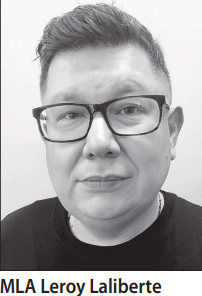
Leroy Laliberte is adamant Saskatchewan’s drug crisis is out of control. The MLA for Athabasca, who also serves as the NDP’s shadow minister of mental health and addictions, said recent federal data backs up widespread claims from emergency responders on the frontlines of the province’s drug crisis they are being overrun.
Statistics Canada figures released during an Ottawa news conference in June laid out drug deaths have declined nationwide; however, the Saskatchewan-specific data, Laliberte said, shows a massive increase in emergency calls related to drug overdoses. The data indicates, in 2018 – the same year Scott Moe became premier – there were 196 reported EMS responses to suspected opioid-related overdoses. Last year, that figure shot up to more than 1,700. “That’s a nearly 800 per cent increase since Moe took office — but that’s just the tip of the iceberg,” Liberate said. “As we know, our major cities are reporting hundreds of overdoses each month this year, including 680 incidents in Saskatoon alone in April. People are overdosing on our streets at an unprecedented rate and frontline workers, despite doing more than is reasonable, can’t keep up.”
Laliberte and the NDP’s labour shadow minister Nathaniel Teed joined frontline firefighters for a news conference in Saskatoon June 17. “We have called for action for years and the Saskatchewan Party hasn’t done a thing,” Teed said. “Instead of adding supports to the frontlines in Saskatoon, they’ve shuttered agencies and cut off critically needed frontline healthcare workers from being able to do their jobs. The workers on the frontlines are burning out. Where is the plan to recruit more healthcare workers? Where are the supports for those taking on so much? Workers are desperate and begging for a plan while Scott Moe makes plans for his summer vacation — this a sorry excuse for leadership.” According to the NDP, Saskatchewan also saw the highest rate of emergency room visits among all Canadian provinces tracking such data. “Our hospitals are overrun,”
Laliberte said. “We’ve got people left for days in the hallways or reception areas — and so much of this is avoidable if we had a government actually investing in frontline supports. People are suffering and dying while Scott Moe sits on his hands. They’ve had 20 years to address this issue and it’s worse than ever. It’s time for Moe and his ministers to go. It’s time for a real plan to address the drug crisis. It’s time for change.”
The recent news release served as an outlet for Laliberte to continue raising concerns he has been raising for some time now. Last fall, Laliberte noted criminals are flooding communities with dangerous drugs and nearly a person a day is dying of overdose or poisoning. “Often, the victims are kids — they are our future and this government has failed them so badly,” Laliberte said at the time. “While companies seeking to develop resources on our traditional territories are welcomed with open arms, major investments, and swift approvals, our communities are still asked to wait decades for basic services, health care, long-term care for our elders, and reliable emergency response. We’re not asking for charity or salvation. We’re here to raise long-standing shortfalls, so together — respectfully, collaboratively — we can build real solutions that keep our families safe, healthy and supported on the lands we’ve always called home.” Laliberte said it boils down to fairness and dignity. “And, this is about ensuring northern and Indigenous communities are finally given the same urgency, priority and respect every other community in this province expects and deserves,” he said.
Earlier this year, as part of it’s 2026-27 budget, the provincial government announced it is making significant investments to increase access to mental health and addiction treatment in Saskatchewan. The budget will invest in building capacity by opening more treatment spaces and creating a new youth detox site, support individuals in specific stages of their recovery journey, and make the system easier to access so patients and families can receive the help they need. A record investment of $673.7 million in the 2026-27 budget supports mental health and addictions programs. This is a $49.9 million or 8.0 per cent increase from 2025- 26. The 2026-27 budget provides more than $23 million more for targeted investments that will create about 200 more addictions treatment and recovery spaces in multiple Saskatchewan locations, expand resource access to mental health and addictions supports, continue the transition to a recovery-oriented system of care and better meet client needs to improve outcomes for individuals, families and communities. Of this increase, $10.8 million will: accomplish the commitment to add 500 addictions treatment spaces by March 2027; establish a six-bed secure youth detox site at Calder Centre in Saskatoon; and expand rapid access counselling services for adults.
“We have entered the midway point of our ambitious five-year Action Plan for Mental Health and Addictions that will double treatment and recovery spaces and make major program improvements to benefit patients and families,” mental health and addictions minister Lori Carr said. “There are more than 300 new addictions treatment spaces now operational in Saskatchewan with about 200 more spaces planned over the next 12 months to successfully fulfill our 500-space commitment and connect more patients to help closer to home.”