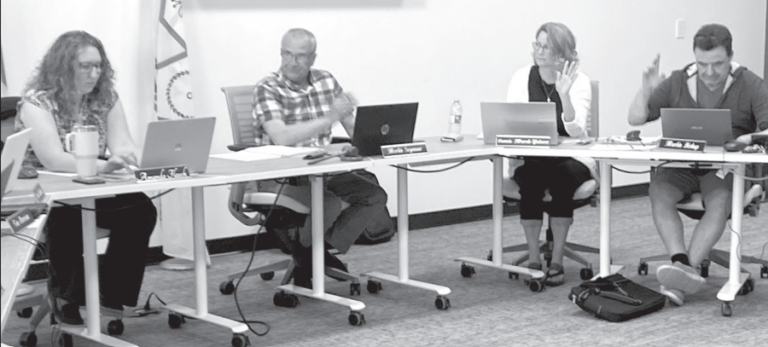
New life could soon be breathed into the former Waskoosis Safe Shelter. During the regular meeting of Meadow Lake city council held Monday, May 25, a discretionary use application from the Meadow Lake Tribal Council (MLTC) was approved for advertising. If ultimately approved, the application would allow for the redevelopment of the former Waskoosis Safe Shelter building at 708 2nd Ave. West. A public hearing on the application will take place at council’s June 22 meeting.
“This property was formerly operated by the applicant as a special care home known as the Waskoosis Safe Shelter,” planning and development manager Neil Marsh reiterated in his official recommendation to council. “This use was discontinued following the opening of the new Waskoosis Safe Shelter several years ago in a different location within the City of Meadow Lake. The applicant now wishes to repurpose this original building for similar use, to be known as a sober living transition house.” According to Marsh, the project requires no exterior changes to the building or premises, and appears to meet a recognized need for such services in the community. In addition to advertising MLTC’s plans for the site, the discretionary use process also includes notifying residents who live within 75 metres of the property, the aforementioned public hearing and the opportunity for the public to to ask questions or raise concerns prior to council making a final decision.
“It says here this will be known as a sober living transition house, so will they (residents) be gone somewhere for treatment and this is a house in-between or is this the treatment centre?” Asked councillor Connie Marsh-Yuhasz. On hand to respond on behalf of MLTC was community wellness director Sandra Millar. “This facility, as you stated, will be a transition home,” Millar said. “The goal is, when they have completed treatment, when they come out – whether it’s after a 30-day program, 42-day program or three-month program depending on which treatment they attended – they would come into this facility to stay for a period of time. It could be three months, six months or possibly a year to get them into a place where they have developed the skills they need. It takes time to go through that because, most times, they go right back into the environment they were in before and that is just setting them up for failure.”
Millar went on to note MLTC will also be looking to offer programming for the individuals who will be residing at the sober living transition house. “We are looking for a place at the moment,” she said. “We do rent different churches and facilities throughout the city to hold programming, but we are looking for something more permanent. The programming won’t be at the house, but rather somewhere else. Once we get them into programming, they will be able to see a nurse practitioner, we have a medicine program, outreach, addictions counselling and more. The house itself will have 24-hour staffing and 24-hour security. There will be someone there at all times. It’s not for people waiting to go into the detox centre, it’s for those who have already had a period of sobriety. Before transitioning into this facility, clients will also have to do another drug and alcohol screening.” Councillor Marty Bishop asked if the clients would be allowed to come and go from the home. “No,” Millar replied. “We will definitely have house rules. Currently, at the safe shelter, there is an 8 p.m. curfew and we are going to do something very similar to that. There will be provisions, however, if they need to be out after curfew say for work purposes, but it won’t be a come and go.”
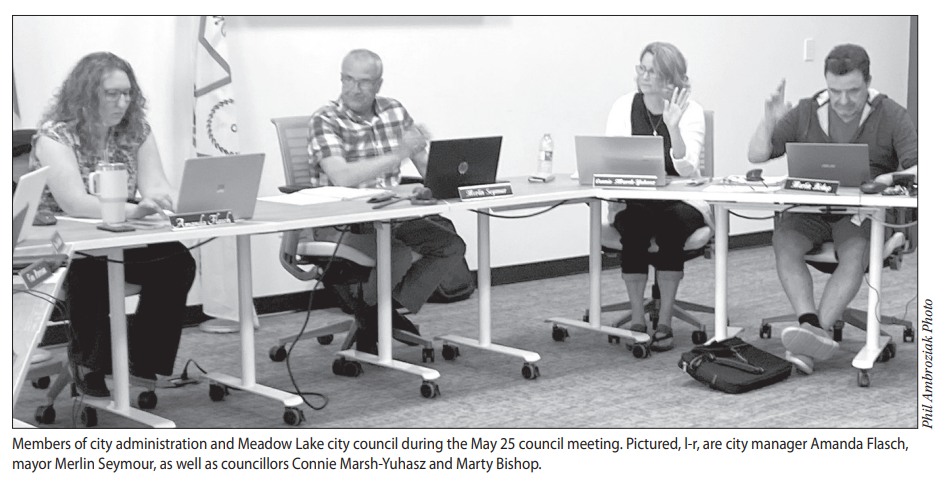
Councillor Ron Dishko asked how many spots would be available in the house. “There are eight beds currently within the facility, and we’re able to divide them between male and female,” Millar said. Bishop also wondered if the facility would be open to anyone who needs it or only for Indigenous clients. “It will be just like the safe shelter,” Millar noted. “Because this will be funded by the Government of Saskatchewan, it will be open to all Saskatchewan residents.” The motion to approve the discretionary use application for advertising was made by Bishop, seconded by Dishko and subsequently approved.